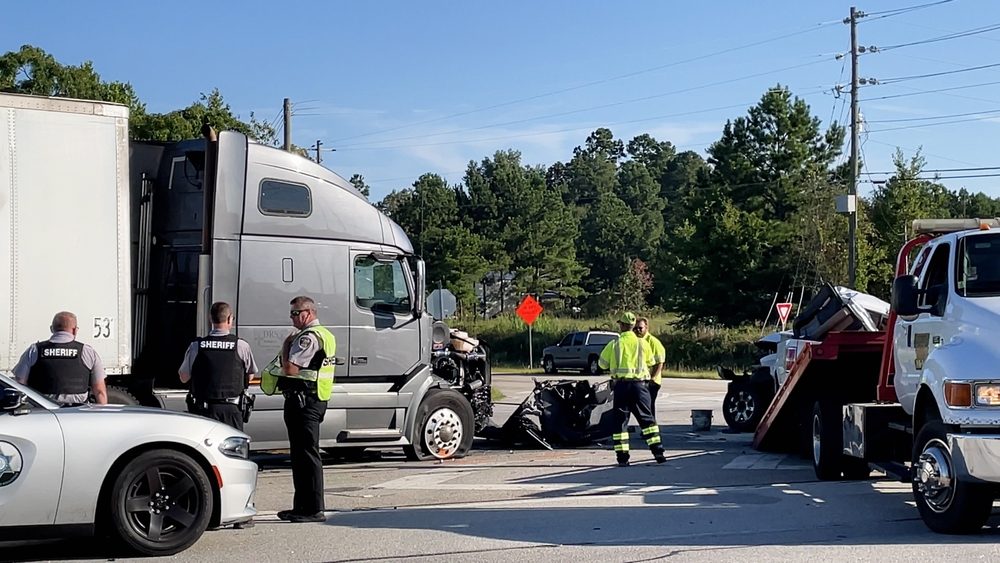
A collision involving a commercial truck on Interstate 75, Interstate 64, or New Circle Road can leave Lexington drivers facing serious injuries, unexpected expenses, and complicated insurance questions. Unlike ordinary passenger vehicle accidents, commercial truck crashes often involve federal safety regulations that influence how liability is investigated and established.
Understanding these regulations can help injured motorists and their families recognize what evidence matters, who may be responsible, and how federal trucking requirements affect personal injury claims in Kentucky.
Federal trucking regulations establish safety standards for commercial drivers, trucking companies, vehicle maintenance, and cargo transportation. When a trucking company or driver violates an applicable regulation, that violation may provide important evidence in a truck accident case. However, proving a regulatory violation does not automatically establish liability. Injured individuals generally must also demonstrate how the violation contributed to the collision and resulting damages.
What Lexington Drivers Should Know About Federal Trucking Regulations
- Federal rules apply to many commercial trucks traveling through Lexington. The Federal Motor Carrier Safety Administration (FMCSA) regulates qualifying interstate commercial motor vehicle operations, including driver qualifications, working hours, inspections, and maintenance.
- Driver fatigue is a major regulatory concern. Hours-of-service rules limit how long covered commercial drivers can operate without required rest periods.
- Maintenance records can reveal safety problems. Trucking companies must comply with applicable inspection, repair, and maintenance requirements.
- Kentucky highways carry significant commercial traffic. Major routes such as I-75 and I-64 connect Fayette County with regional and interstate freight corridors.
- Regulatory violations can strengthen accident investigations. Driver logs, electronic records, inspection reports, and company documents may help establish negligence when supported by other evidence.
Federal Trucking Regulations That Affect Lexington Accident Claims
Federal trucking regulations affect Lexington accident claims by establishing safety obligations that qualifying commercial drivers and motor carriers must follow. These requirements address driver fatigue, vehicle condition, driver qualifications, and cargo security. When a violation contributes to a crash, the relevant records can become important evidence in determining responsibility.
The Federal Motor Carrier Safety Regulations, primarily found in Title 49 of the Code of Federal Regulations, establish many of these standards.
Hours-of-Service Regulations
Hours-of-service regulations limit driving and on-duty time for covered commercial drivers to reduce fatigue-related crashes.
For most property-carrying commercial drivers operating under the standard federal rules:
- Driving is generally limited to 11 hours after 10 consecutive hours off duty.
- Driving generally cannot occur beyond the 14th consecutive hour after coming on duty, subject to applicable exceptions.
- A qualifying 30-minute break is generally required after eight cumulative hours of driving without a qualifying interruption.
- Drivers generally cannot exceed 60 hours on duty over seven days or 70 hours over eight days, depending on the motor carrier’s operating schedule.
Certain exceptions and special provisions may apply.
If a fatigued truck driver causes a collision near the I-75 and I-64 interchange, electronic logging device records and other documentation may help determine whether the driver exceeded applicable limits.
Vehicle Inspection and Maintenance Requirements
Federal maintenance regulations require motor carriers to systematically inspect, repair, and maintain vehicles under their control.
These requirements can be especially relevant when a collision involves brake failure, defective tires, steering problems, or other mechanical issues.
For example, a commercial truck experiencing brake problems while approaching congested traffic on New Circle Road may raise questions about whether the trucking company performed required inspections and addressed known defects.
Maintenance records, inspection reports, and repair documentation can help investigators determine whether the problem was preventable.
Driver Qualification Standards
Federal regulations establish qualification requirements for drivers operating covered commercial motor vehicles.
Depending on the vehicle and operation, these requirements may involve commercial driver’s licenses, medical qualifications, driving history reviews, and other documentation.
A trucking company that allows an unqualified driver to operate a commercial vehicle may face additional scrutiny after a serious accident.
Cargo Securement Requirements
Federal cargo securement rules are designed to prevent freight from shifting, falling, or affecting vehicle stability during transportation.
Improperly secured loads can contribute to rollover accidents, jackknife collisions, and roadway hazards.
On highways connecting Lexington with Georgetown, Winchester, and Richmond, investigators may examine loading procedures and cargo documentation when a crash involves shifting freight or a lost load.
Local Data and Federal Safety Oversight
Federal safety oversight provides important information for Lexington truck accident investigations, even when a particular collision has not resulted in a formal regulatory finding. The FMCSA maintains safety regulations and certain motor carrier records, while Kentucky transportation and law enforcement agencies maintain information relevant to roadway safety.
Publicly available information can help explain applicable requirements, but accident-specific conclusions generally require an examination of the driver, vehicle, motor carrier, and crash circumstances.
Investigators may review police reports, electronic logging records, vehicle inspection information, and other relevant documents to determine whether a federal safety requirement was violated.
How Federal Regulations Influence Truck Accident Liability in Lexington
Federal regulations influence truck accident liability by helping establish the safety duties that apply to commercial drivers and trucking companies. When a violation contributes to a collision, it may support a negligence claim, although Kentucky law still governs important questions involving liability, causation, damages, and comparative fault.
Potentially responsible parties may include the truck driver, motor carrier, maintenance contractor, or another entity whose conduct contributed to the crash.
For instance, a driver may have violated hours-of-service limits while the trucking company failed to address repeated scheduling concerns. Both circumstances could become relevant to the investigation.
At Herren Law, we understand that truck accident claims can involve multiple parties and substantial technical evidence. We help injured individuals understand the legal issues involved in pursuing compensation after a commercial vehicle collision.
Warning Signs That Federal Trucking Regulations May Have Been Violated
Certain crash circumstances may indicate that investigators should examine potential federal regulatory violations. These signs do not prove misconduct by themselves, but they can identify records and safety issues worth reviewing.
- The truck driver appeared fatigued. Delayed reactions, drifting between lanes, or reports of prolonged driving may justify reviewing hours-of-service records.
- The truck experienced brake or steering problems. Mechanical failures may raise questions about inspections and maintenance.
- Cargo shifted or fell from the trailer. Investigators may need to examine loading practices and securement requirements.
- The driver lacked required qualifications. Licensing and qualification records may reveal whether the driver met applicable standards.
- The trucking company cannot produce relevant records. Missing documentation may complicate the investigation and raise additional questions.
- The driver was allegedly pressured to meet unrealistic deadlines. Dispatch communications may help establish whether scheduling practices contributed to unsafe driving.
- The vehicle had known unresolved defects. Previous inspection reports or repair records may help determine whether the carrier addressed identified safety concerns.
When to Contact a Truck Accident Attorney in Lexington
Contacting a truck accident attorney is worth considering when a commercial vehicle collision causes significant injuries, disputed liability, or questions about federal safety compliance. Legal assistance may be particularly useful when relevant records are controlled by a trucking company or when several parties may share responsibility.
Truck accident investigations can involve evidence that is difficult for injured motorists to obtain independently.
A lawyer may help identify relevant records, evaluate applicable regulations, communicate with insurers, and determine which parties may be legally responsible.
After a serious collision in Fayette County, injured individuals should prioritize medical treatment and preserve available documentation, including photographs, witness information, and accident reports.
Common Causes of Federal Trucking Regulation Violations
Federal trucking regulation violations can result from driver conduct, inadequate company oversight, maintenance failures, or improper cargo handling. In the Lexington area, these issues may become particularly consequential on busy interstate corridors and roads where commercial vehicles interact with commuter traffic.
Driver Fatigue and Scheduling Pressure
Long-distance freight transportation can involve demanding schedules. When a driver exceeds applicable hours-of-service limits or operates while dangerously fatigued, reaction time and judgment may suffer.
Inadequate Vehicle Maintenance
Failure to address worn tires, brake defects, or steering problems can create serious hazards.
Mechanical problems may become especially dangerous when heavy commercial vehicles encounter slowing traffic, curves, or changing road conditions.
Improper Cargo Loading
Overloaded or improperly secured freight can affect braking, steering, and vehicle stability.
Cargo-related issues may involve the driver, motor carrier, loading company, or other parties, depending on their responsibilities.
Insufficient Driver Oversight
Motor carriers have obligations concerning driver qualifications and compliance with applicable safety requirements.
Inadequate oversight can become relevant when a company knowingly permits unsafe practices.
How Drivers Can Reduce Risks Around Commercial Trucks
Lexington motorists can reduce certain risks around commercial trucks by maintaining safe following distances, avoiding prolonged travel in blind spots, and allowing extra room for large vehicles to turn or stop. These precautions cannot prevent every collision, particularly when a commercial driver or trucking company acts negligently.
Drivers traveling along I-75, I-64, or Man o’ War Boulevard should avoid cutting closely in front of trucks and exercise caution when changing lanes near tractor-trailers.
During heavy rain, reduced visibility and longer stopping distances make additional space especially valuable.
Motorists cannot independently verify a truck driver’s compliance with federal regulations. If unsafe commercial driving creates an immediate danger, contacting the appropriate authorities is safer than attempting to confront or follow the driver.
What to Expect From a Truck Accident Investigation
A truck accident investigation may involve reviewing federal safety compliance, reconstructing the collision, examining vehicle conditions, and identifying potentially responsible parties. The available evidence and complexity of the crash determine how extensive the investigation needs to be.
Relevant evidence may include:
- Electronic logging device data and driver duty-status records.
- Driver qualification and training documentation.
- Vehicle inspection and maintenance records.
- Engine control module or other available vehicle data.
- Dispatch communications and delivery schedules.
- Cargo loading and securement records.
- Police reports, photographs, and witness statements.
Some records are subject to limited retention requirements, making timely preservation requests important.
A thorough investigation may help clarify whether a federal regulatory violation contributed to the accident, but no particular outcome can be guaranteed.
Common Mistakes After a Lexington Truck Accident
Avoiding common mistakes after a truck accident can help protect both your health and the evidence needed to evaluate a potential injury claim.
Mistake 1: Assuming the police report contains all relevant evidence.
A collision report may document important facts without addressing driver logs, maintenance records, or company safety practices.
Better approach: Preserve the report and consider whether additional commercial trucking records should be reviewed.
Mistake 2: Delaying medical evaluation.
Some injuries are not immediately obvious after a serious crash.
Better approach: Seek appropriate medical care and follow recommended treatment.
Mistake 3: Assuming every federal violation automatically proves negligence.
A violation may be relevant, but its legal significance depends on the circumstances and its connection to the collision.
Better approach: Evaluate regulatory evidence alongside Kentucky negligence and causation requirements.
Mistake 4: Accepting an early settlement without understanding the damages.
An early offer may not account for ongoing treatment or future losses.
Better approach: Understand the documented injuries, financial effects, and potential long-term consequences before resolving a claim.
Common Lexington Truck Accident Scenario
A common local truck accident scenario involves a tractor-trailer approaching slowed traffic on I-75 near Lexington. The truck fails to stop in time and strikes several passenger vehicles.
Investigators may initially consider driver distraction or following distance. However, a more detailed examination could reveal questions about driving hours, brake maintenance, or dispatch instructions.
Electronic logs, inspection records, and vehicle data may help determine whether the driver or motor carrier failed to meet applicable safety requirements.
This is a hypothetical example, not an actual client case. It illustrates why commercial truck collisions may require more extensive investigation than ordinary passenger vehicle accidents.
Legal Services That May Help After a Truck Accident
Truck accident legal services may help injured Lexington residents investigate collisions, identify potentially responsible parties, assess damages, and pursue claims under applicable Kentucky law. When federal safety regulations are involved, reviewing commercial vehicle records can be an important part of evaluating the case.
Our approach begins with understanding the accident circumstances and the injuries involved.
Depending on the case, legal work may involve reviewing trucking records, evaluating potential regulatory violations, communicating with insurance companies, and pursuing compensation for documented losses.
Recoverable damages may include medical expenses, lost income, pain and suffering, and other legally recognized losses, depending on the facts.
Discuss your Lexington truck accident case
Comparing Your Legal Options After a Commercial Truck Collision
Lexington truck accident victims can generally choose to handle insurance communications themselves or seek legal representation. The appropriate choice depends on the severity of the injuries, the complexity of liability, the evidence involved, and the individual’s circumstances.
| Handling the claim independently | Working with an attorney |
|---|---|
| You gather available records and communicate with insurers. | An attorney can assist with evidence requests and insurer communications. |
| Obtaining commercial trucking records may be difficult. | Legal procedures may help secure relevant company records. |
| You evaluate settlement offers and damages. | An attorney can assess damages and explain legal options. |
| You manage deadlines and procedural requirements. | An attorney can help identify applicable deadlines and requirements. |
Kentucky generally applies a two-year limitations period to many motor vehicle injury claims under KRS 304.39-230, with specific statutory rules affecting when the period begins. Exceptions and different deadlines may apply, so individual circumstances should be reviewed promptly.
Truck Accident Legal Support in Lexington and Surrounding Communities
Truck accident legal concerns affect motorists throughout Lexington, Fayette County, and nearby communities, including Georgetown, Nicholasville, Winchester, and Richmond. Commercial vehicles regularly travel regional routes connecting these areas with Central Kentucky’s interstate system.
We can discuss the circumstances of a collision and the potential legal considerations associated with federal trucking regulations.
The Cost of Overlooking Federal Safety Violations
Overlooking potential federal safety violations can leave important questions unanswered about why a commercial truck collision occurred and who may be responsible. Missing evidence can also make it harder to evaluate injuries, damages, and insurance claims accurately.
For injured motorists, the consequences of a serious collision may include ongoing medical expenses, lost earnings, reduced mobility, and substantial disruptions to daily life.
If relevant records are not preserved promptly, some information may become more difficult to obtain.
Take action to protect important truck accident evidence
Frequently Asked Questions About Federal Trucking Regulations and Lexington Truck Accidents
Do federal trucking regulations apply to all commercial trucks in Lexington?
No. Federal trucking regulations apply to qualifying commercial vehicles and operations, with different requirements depending on vehicle characteristics, transportation activities, and applicable exceptions. Kentucky also has state-level commercial motor vehicle requirements. Determining which rules govern a particular collision requires examining the truck, driver, carrier, and nature of the trip.
Can a federal trucking violation prove negligence in a Kentucky accident case?
A federal trucking violation can provide evidence relevant to negligence, but it does not automatically establish liability. The injured person generally must demonstrate the necessary legal elements, including causation and damages. Kentucky courts may evaluate the applicable regulation, the conduct involved, and how the alleged violation contributed to the collision.
What are the federal driving-hour limits for truck drivers traveling through Fayette County?
For most covered property-carrying drivers, federal rules generally allow up to 11 hours of driving after 10 consecutive hours off duty, within a 14-hour driving window. Additional break and weekly duty limits apply. Exceptions may change the requirements, so the driver’s operation and circumstances must be examined.
Can electronic logging devices help prove a Lexington truck accident claim?
Yes. Electronic logging devices can provide information about recorded driving time and hours-of-service compliance. These records may help investigators evaluate whether fatigue or excessive driving contributed to a collision. However, logging information does not independently prove negligence, and investigators may need additional evidence such as dispatch records and witness statements.
Who can be held responsible for a commercial truck accident in Kentucky?
Potentially responsible parties may include the truck driver, motor carrier, maintenance provider, cargo loading company, or another negligent party. Liability depends on each party’s conduct and its contribution to the accident. Federal regulations may help establish relevant duties, while Kentucky law governs important aspects of the resulting injury claim.
What should I do after a truck accident on I-75 near Lexington?
Seek emergency assistance when necessary, obtain appropriate medical care, and report the collision to law enforcement. If it is safe, document vehicle positions, visible damage, and witness information. Avoid entering dangerous traffic areas. Because commercial trucking records may be important, consider obtaining legal guidance before relevant evidence becomes unavailable.
How do maintenance violations affect truck accident claims in Lexington?
Maintenance violations may support a claim when an unsafe vehicle condition contributes to a collision. For example, evidence of known brake defects or neglected inspections could become relevant after a rear-end crash. Investigators must still establish the relationship between the vehicle condition, the responsible party’s conduct, and the resulting injuries.
Can I recover compensation if I was partially responsible for a truck accident?
Potentially, yes. Kentucky follows a pure comparative fault system, meaning an injured person’s recoverable damages may be reduced according to their percentage of fault. Partial responsibility does not necessarily eliminate recovery. The amount available depends on the evidence, applicable law, insurance considerations, and the damages established.
How long do I have to file a truck accident lawsuit in Lexington?
Many Kentucky motor vehicle injury claims are subject to a two-year limitations period, but the date from which that period runs and the applicable deadline depend on statutory provisions and case circumstances. Other claims may have different deadlines. Prompt legal review is important to avoid losing the opportunity to pursue compensation.
Protect Your Rights After a Lexington Truck Accident
Federal trucking regulations play an important role in commercial vehicle safety and may provide valuable evidence when a serious collision occurs. Understanding how these requirements interact with Kentucky injury law can help injured individuals make informed decisions about their next steps.
At Herren Law, we can help you explore the legal questions surrounding a truck accident and understand the options available for pursuing accountability.
Get Answers About Your Lexington Truck Accident Claim
You deserve clear information about your rights, the evidence involved, and the legal process after a serious commercial truck collision.